Nakiri vs. Chef Knife: Which Belongs in Your Kitchen?
Choose a chef knife for varied everyday prep. Choose a Nakiri when chopping and slicing vegetables take center stage. Both belong on a cutting board, but their blade shapes favor different movements. Here is how to pick the right one for the meals you actually cook.
Nakiri vs. chef knife at a glance
| Feature | Nakiri | Chef knife |
|---|---|---|
| Main role | Vegetable prep | All-purpose prep |
| Blade shape | Broad, rectangular profile with a straighter edge | Curved edge and pointed tip |
| Typical movement | Controlled push cuts and up-and-down chopping | Slicing, chopping and rocking cuts |
| Excaliblades blade length | 7 inches | 8 inches |
What is a Nakiri knife used for?
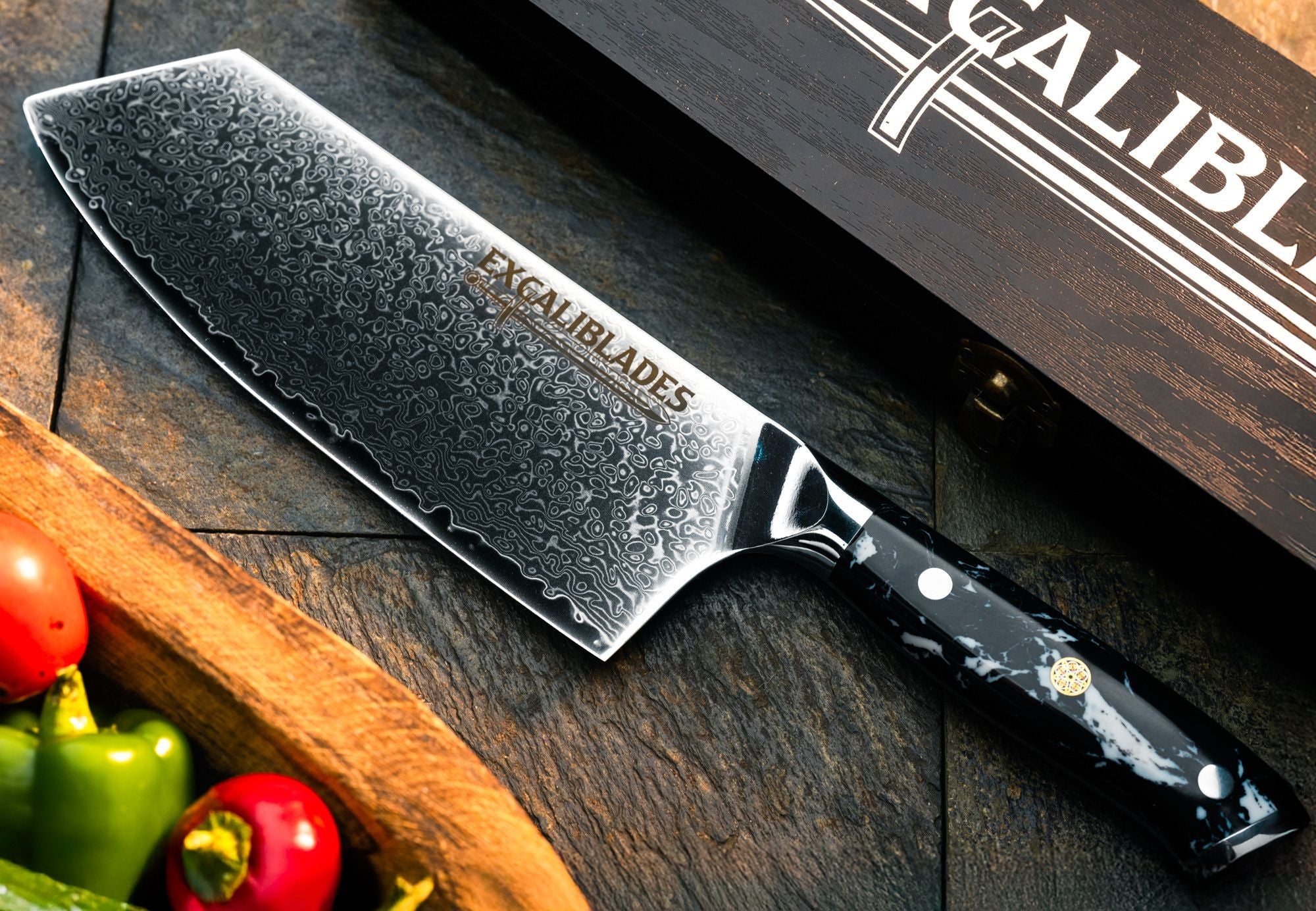
A Nakiri is a vegetable knife. Its broad blade and straighter edge suit repeated cuts through ingredients on a board. Think sliced cabbage for slaw, diced onions for soup, zucchini for a skillet dinner or carrots cut into matchsticks.
Use a controlled forward-and-down push cut, then lift and reset the blade. Keep your guiding fingertips curled back in a claw grip. The broad blade also helps gather chopped ingredients; keep your fingers away from the cutting edge as you transfer them.
The Excaliblades 7-inch Damascus Nakiri vegetable knife is a useful choice if vegetables make up much of your daily prep.
What is a chef knife used for?
A chef knife handles a wider mix of kitchen tasks. Use it to slice boneless meat, chop vegetables, dice onions and mince herbs. Its pointed tip helps with more detailed cuts, while the curved edge allows a rocking motion on the board.
If dinner means cutting peppers, slicing chicken and mincing parsley, a chef knife can handle that whole sequence. For a first versatile kitchen knife, the Excaliblades 8-inch VG-10 Damascus chef knife is the practical starting point.
Which knife should you buy first?
- Choose the chef knife if you want one blade for varied meals, including vegetables and boneless proteins.
- Choose the Nakiri if you already have an all-purpose knife and want a dedicated blade for frequent vegetable prep.
- Keep both if you enjoy cooking and want to switch between an all-purpose blade and a vegetable specialist.
For a fall meal, use the Nakiri for cabbage, onions and carrots, then reach for the chef knife to slice boneless roast meat and mince herbs. Neither needs a crown to earn its place at the table.
What do the two Excaliblades knives have in common?
Both feature a VG-10 steel core, 67-layer Damascus stainless steel construction, full-tang construction and a G10 handle. Each includes a protective sheath and black wooden gift box, with a lifetime warranty and free U.S. shipping from our small Texas family business.
Common questions
Can a Nakiri replace a chef knife?
For a vegetable-focused cook, a Nakiri can handle much of the daily chopping. A chef knife offers more flexibility for mixed ingredients and tasks that benefit from a pointed tip.
Is a Nakiri the same as a cleaver?
No. A rectangular blade does not automatically make a knife a heavy-duty cleaver. A Nakiri is designed around vegetable prep. Use either of these knives for their intended kitchen tasks and avoid cutting bones or frozen foods.
How should I care for Damascus kitchen knives?
Hand wash with mild dish soap, rinse and dry promptly. Do not put your Excaliblades knives in the dishwasher. Store them securely in their protective sheaths or another suitable knife-storage system.
Find your everyday blade
A versatile Chef Knife or a vegetable-focused Nakiri—choose the blade that fits the way you cook.
Black wooden gift box and sheath included · Lifetime warranty · Free U.S. shipping